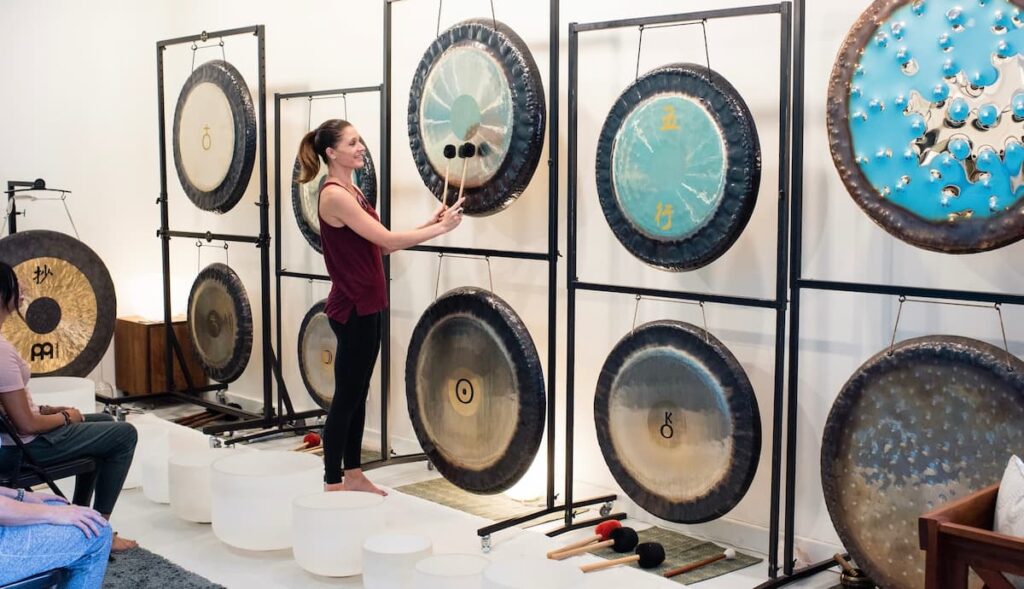
Picture stepping into a yoga studio for your first sound bath. A friend told you how much she loves them. She is sleeping better, feels less stressed, and has more creative energy. You are curious and a little nervous.
The experience is not what you expected. The sounds are sharp and loud. Transitions feel abrupt. There are long silences between instruments. You leave feeling unsettled rather than relaxed.
What went wrong?
What Separates a Good Sound Bath from a Poor One
The biggest difference between a sound bath that works and one that does not almost always comes down to training. An untrained practitioner typically relies on intuition alone, but intuition does not teach you which notes work together, how loud to play for the room you are in, or how to guide people into a relaxed state consistently. They are playing instruments and hoping it works out.
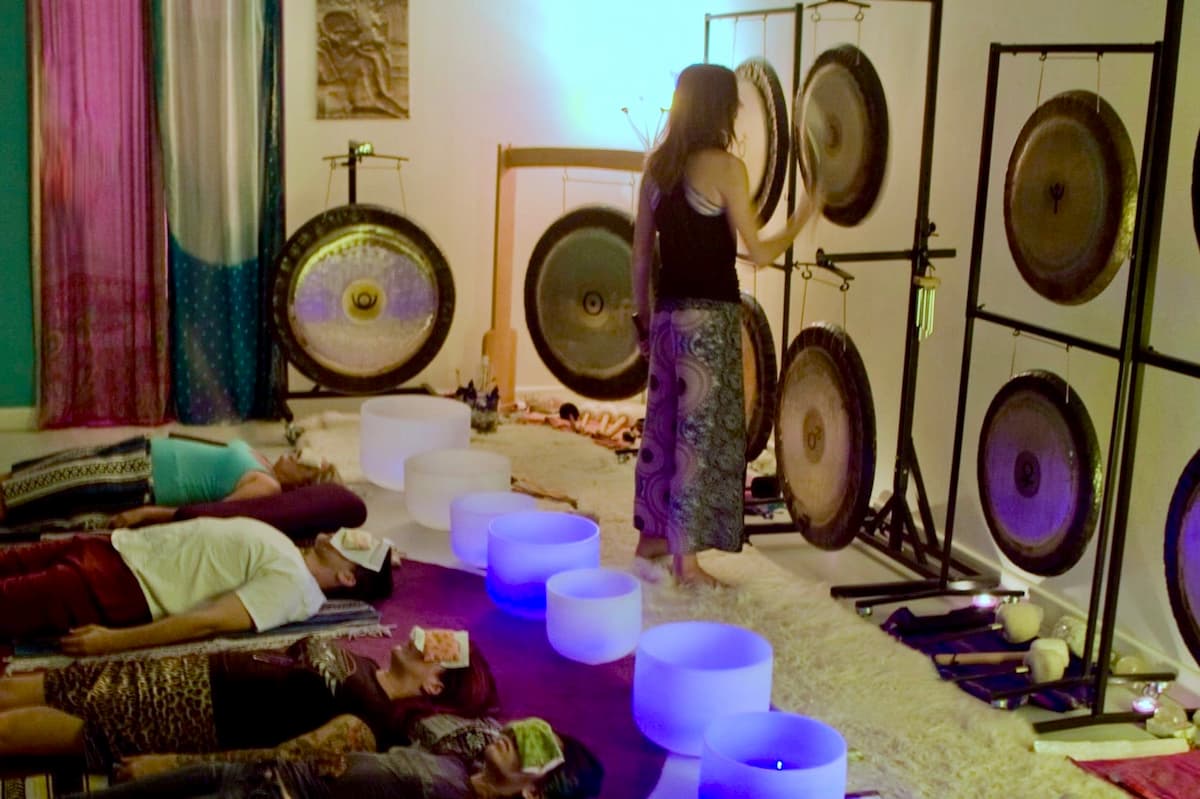
A well-trained practitioner plays a sound bath that feels flowing and connected from start to finish. You are not aware when they change instruments or move around the room. There are no silences or abrupt shifts. It blends into a seamless experience, and when it ends, you think: how long was that? Something happened, even if you cannot fully describe it.
That quality is not accidental. It is the result of real training and practice.
The 8 Things a Sound Bath Certification Should Cover
1. How to Choose Instruments for the Experience You Want to Create
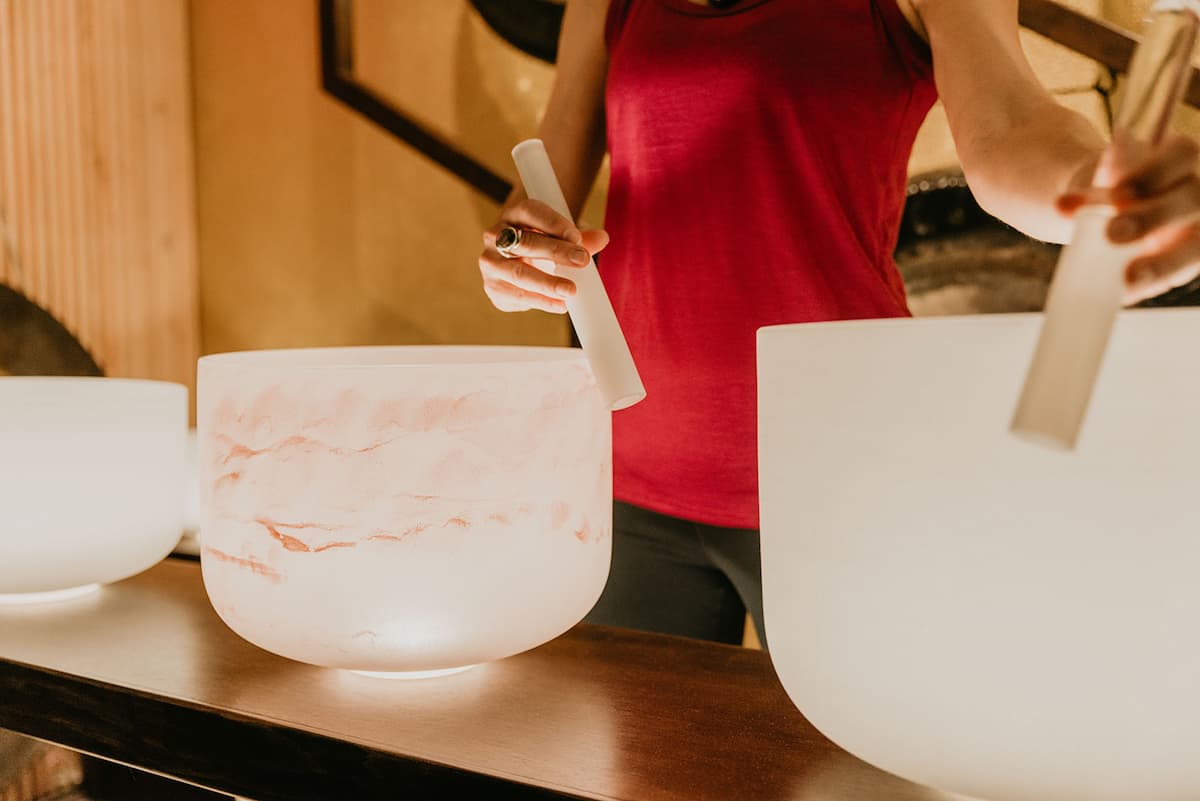
The instruments you use shape the sound bath experience, and a good certification course will teach you how to select them wisely. Two instruments can look similar and cost the same, but sound and feel completely different. One may be harsh or flat, another rich and resonant. A qualified teacher can explain those differences from direct experience and help you make informed decisions within a variety of budgets.
This matters more than most new practitioners realize. In 2019, after years of using the same well-regarded brand of gong, we tried gongs from a different maker. The new maker had over forty years of experience making gongs. The difference was immediate. Regular attendees said they went deeper. I even lost track of time during the first sound bath event that I played with them (and got a little gong high!). After that experience, I primarily play with the new brand of gongs. Instrument quality shapes the experience in ways that are difficult to explain until you feel it. Sound bath instruments: what you need to start.
2. Playing Techniques That Support Deep Relaxation
A sound bath is not just about playing instruments in sequence. It is about how you play them, how you layer and blend their sounds, and how that arc guides participants into a relaxed, inward state and keeps them there.
Without training, practitioners often switch between instruments too quickly, play high-pitched sounds for too long, or play at volumes that are too loud, causing discomfort and stress, or too quiet, preventing an immersive experience. A strong certification course teaches you techniques that help people settle and go deeper, and shows you how to shape a session so the sound carries participants the whole time rather than distracting them.
3. How to Structure a Sound Bath from Start to Finish
A professional sound bath has a deliberate structure, just as music relies on flow, pacing, and contrast. Without this, sessions can feel scattered or directionless, even when the individual sounds are pleasant.
Good training teaches you how to begin the experience, build intensity gradually, navigate its depth, and bring participants back smoothly at the end. You learn to manage transitions so they are invisible, and to use volume and pacing intentionally rather than reactively. The structure becomes the container that makes the experience feel complete rather than random.
4. How to Combine Sounds Musically
Not all sounds work together. Some combinations support relaxation and calm the nervous system. Others create tension or unease, even when the practitioner does not intend it.
A solid course teaches you how different instruments and notes interact, why certain combinations work, and others do not, and how to create a sound environment that is cohesive rather than chaotic. This is one of the areas where untrained practitioners most commonly go wrong: relying solely on intuitive or theory-based sound combining without understanding how sounds actually interact.
5. How to Facilitate a Group Event Professionally
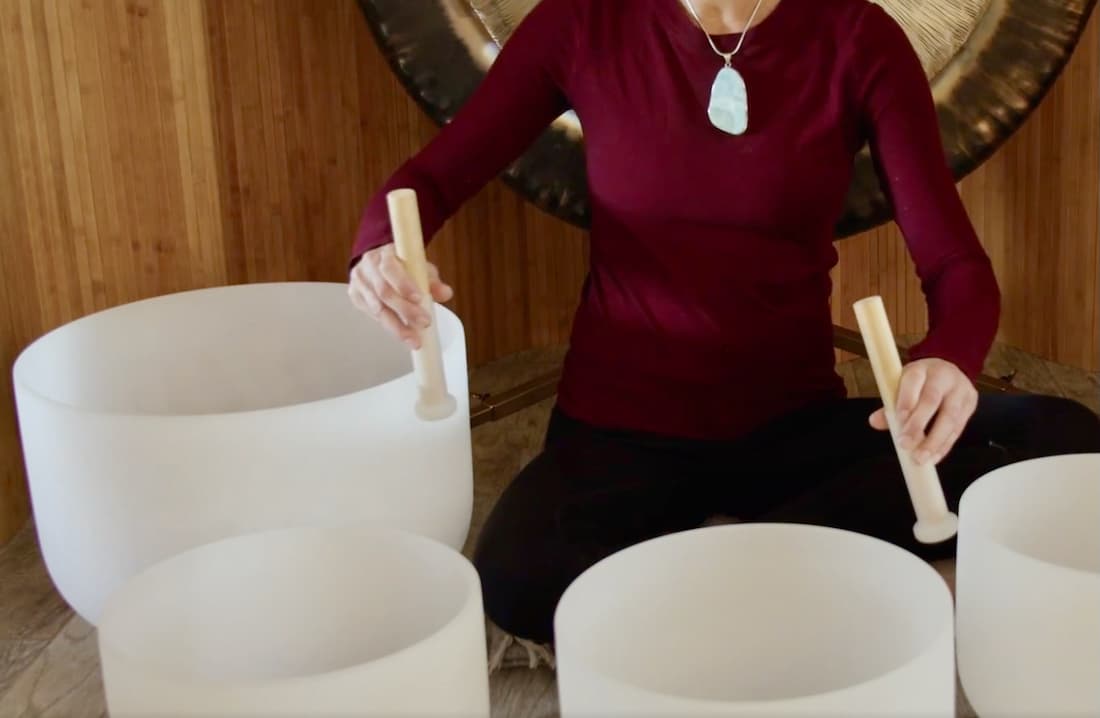
Playing well is only part of the job. A sound bath practitioner also needs to know how to prepare and set up a space, communicate with participants before and after the session, handle event logistics, and present themselves with the clarity and professionalism that make venues and clients want to work with them.
A comprehensive certification should include event facilitation alongside playing methods and techniques. These are equally important, and a course that only teaches one leaves you underprepared for the work.
6. How to Deliver a Consistent Experience Every Time
People return to sound baths when they get reliable results and know what to expect. One of the most common reasons sound bath businesses fail to grow is that participants get inconsistent results. If the experience changes significantly each time because the practitioner improvises without structure, participants cannot track their progress or build a relationship with the practice. When people do not get results consistently, they are less likely to come back.
Good training gives you a repeatable framework and reliable techniques so your sound baths do not depend on guesswork or how you feel that day. Consistency does not mean rigidity. It means knowing how to create an experience people can trust.
We had a student who took our course after hiring an outside practitioner to play at her studio once a month. Each session was different: different instruments, different volumes, sometimes movement or singing, sometimes just sound. People stopped coming because the experience was unpredictable. After completing the training and leading sessions herself, her sound bath events became consistently well-attended.
7. How to Talk About Sound Baths Accurately and Confidently
There is significant misinformation in the sound bath world, including claims that specific frequencies can heal specific organs or conditions. None of these claims has scientific support. When practitioners repeat them, it undermines their credibility and the credibility of the field as a whole.
A good certification teaches you the actual science and music theory behind sound baths, so you can explain what sound baths are and how they work in accurate, honest terms. This matters when participants ask questions, when you are writing marketing materials, and when you want to position yourself as a professional rather than someone repeating things they heard online. It is one of the clearest ways to distinguish yourself from undertrained practitioners.
8. How to Build Confidence Through Preparation
Confidence in front of a group does not come from personality alone. It comes from preparation. When you understand your instruments, know your structure, can answer questions accurately, and have practiced enough to trust your technique, leading a sound bath feels grounding, not stressful.
A certification that takes you through all of the above gives you a real foundation to build on. With each event, your confidence grows not because you are winging it, but because you understand what you are doing and have the skills to back it up.
How Do You Evaluate a Sound Bath Certification Program?
Knowing what a course should cover is one thing. Knowing how to evaluate the person teaching it is another matter.
Look for teachers who have spent years consistently leading professional sound bath events, not just as an occasional side project. Playing occasionally as a side project is different from the sustained professional practice that real teaching requires. Teaching a certification course requires the kind of depth that comes from full-time, consistent professional practice.
Ask how the curriculum was developed. The best courses are built from years of real-world refinement, not assembled from someone else’s training. When we launched the first Soundbath Practitioner Training in 2017, we had already spent years running The Soundbath Center, a full-time dedicated sound bath studio in Los Angeles, and playing thousands of sound baths. The curriculum was built from what we learned through that experience, including the mistakes.
Also, check whether the course covers the instruments you want to work with. Many sound bath certifications focus on crystal singing bowls but give only minimal attention to gongs. If gongs are part of what you want to offer, confirm the training covers them in depth and that the teacher has genuine professional experience playing them. How to choose a sound bath training.
A Course That Covers It All
Our Group Soundbath Player™ Certification Course covers every item on this list in a single, comprehensive course. No second level required. You get instrument selection guidance, proprietary playing techniques, a complete session framework, event facilitation skills, business foundations, and the science and music theory to speak about your work with confidence.
If you want to offer professional sound baths and build something sustainable, this is where to start. Learn more about our certification course.
Related reading: How Do I Become a Sound Bath Practitioner? |Do You Need Training to Play Sound Baths?|What’s the Difference Between a Sound Bath, Sound Healing, and Sound Therapy?