

After a sound bath, many people ask me what it’s like to be on the other side of the instruments. It’s one of the questions I hear most often: ‘What’s it like for you when you play?’ The sound bath benefits are real on both sides, but the two experiences are more different than most people expect.
Playing and receiving a sound bath each offer distinct benefits, and the two experiences are more different than most people expect. Both can help reduce stress, change your mood, and support emotional well-being. When you receive, you focus on stillness and looking inward. Playing is more active and requires focus, coordination, and attention to the people you’re playing for. After leading over 4,000 public sessions since 2004, I’ve experienced both sides and have come to see just how much sound baths can offer.
If you’re not sure how sound baths differ from sound healing or sound therapy, this article covers that clearly.
The Benefits of Receiving a Sound Bath
When you receive a sound bath, you take a passive role. You lie down, close your eyes, and let the sound move through you. Since you are not responsible for anything in the room, your attention naturally turns inward. Not knowing what comes next, your nervous system can let go.
Deep physical relaxation. The first thing most people notice during a well-played sound bath is that their body releases tension they didn’t know they were holding. Faces soften, shoulders drop, breathing slows. For many people, this physical unwinding is the primary benefit, and it often carries over into improved sleep quality in the days that follow.
A quieter mind. Sound baths typically use non-melodic sound, which matters more than most people realize. A melody gives the mind something to follow and analyze. Layered, non-melodic sound gives the mind something to rest in. The difference in how quickly and deeply people settle is noticeable.
The practice of being still. Most of us don’t get much uninterrupted stillness in daily life. Even when we’re resting, our phones are nearby, maybe even in our hands. A sound bath carves out a protected time with nothing to attend to but yourself. At first, this can feel uncomfortable. People fidget, aren’t sure what to do with their hands, and feel like an hour is a long time to just lie there. After, they’re usually surprised how quickly it passed and often think the event is over too soon. That discomfort, and then the ease on the other side, is part of the practice.
Emotional processing. It’s common to experience strong emotions during a sound bath, sometimes unexpectedly. This isn’t a side effect; it’s one of the things a well-played sound bath makes possible. The combination of physical relaxation and inward focus creates conditions where things that have been sitting below the surface can move. Almost everyone reports feeling noticeably better after a session than before it.
Varied inner experiences. Every sound bath feels a little different. Some people see colors or images, while others feel like they’re dreaming but still awake. Some notice physical sensations, others feel emotions. Receiving is about noticing whatever comes up, without trying to control it.

The Benefits of Playing a Sound Bath
Playing is a different experience. Your attention shifts between the instruments and the people in the room. You notice what the group needs and respond as you play, while staying connected to the sounds you’re making. It takes focus, coordination, and being fully present with yourself and the room.
Shifting your own state through playing. No matter how I feel when I start, I almost always feel clearer and more settled by the end of a session. The act of playing, with full attention to the sound, the room, and the physical engagement with the instruments, tends to clear out mental noise in a way that is hard to replicate by other means. It is one of the benefits that has kept me playing for over twenty years.
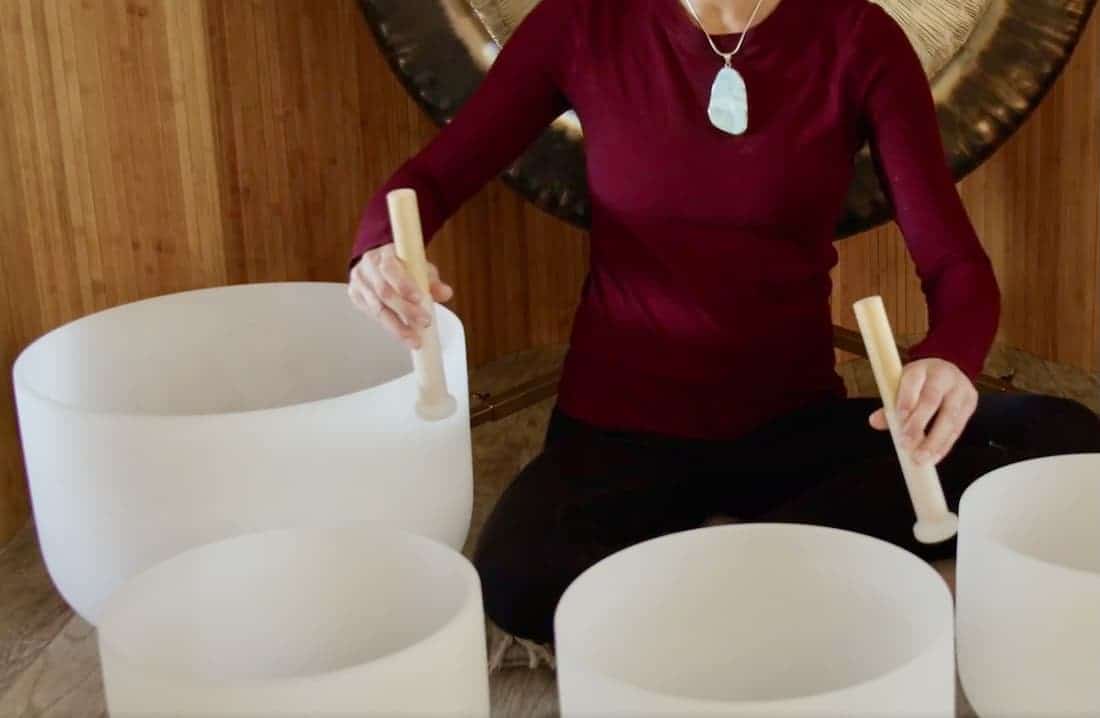
Playing as a personal practice. Playing a gong or crystal singing bowl can be its own form of meditation. You don’t need to be a professional or play for others to benefit. Many people play just for themselves as a regular practice. When you hold a mallet and strike a gong, the vibration moves through your hands and into your body before it even reaches your ears. That physical connection is part of what makes it effective. Sustained gong playing can quiet your mind, shift your mood, and open up creative thinking. Even ten minutes of playing is a great way to start the day feeling grounded. Crystal singing bowls work differently. They tend to focus and settle the mind rather than expand it, and are particularly useful before meetings or any time you need extra clarity.
Helping others go somewhere. Watching a room full of people move from tension to stillness over an hour is its own kind of reward. You can see it happen: faces soften, breathing changes, bodies relax. Creating those conditions and doing something you enjoy gives the work a sense of meaning that grows over time.
Creative engagement. Playing activates a different mode of attention than receiving does. Many practitioners find that creative ideas surface during sessions, not as distractions, but as a kind of clarity that comes with sustained focus. Solutions to problems, shifts in perspective, and new directions tend to arise when the mind is engaged but not effortful.
Building a skill with real career potential. Playing a sound bath well is something you develop over time, and that skill has genuine value. Since we began offering sound bath practitioner training courses in 2017, we’ve seen students build part-time and full-time practices doing this work. How far it goes depends on effort, consistency, and the market you’re in, but the path is real. How do I become a sound bath practitioner?
Playing vs. Receiving: A Quick Comparison
Both experiences offer real benefits, and they complement rather than compete with each other. Here is how they differ:
When you receive, you show up and let go. You lie down, close your eyes, and the only thing asked of you is to be present. What happens in the room is not your responsibility.
When you play, you are the one creating the experience for everyone else. You are listening, adjusting, and guiding the room through sound for the entire sound bath experience. At the end, you feel it too, not the same way a receiver does, but in your own way.
Many practitioners find that experiencing both sides gives them the deepest understanding of what sound baths actually do, for themselves and for the people they play for.
Thinking About Playing Professionally?
If the benefits of playing sound baths are something you want to pursue, the next step is understanding what professional practice actually involves, including the training, the instruments, and what it realistically takes to build a career around it. Learn more about our professional sound bath certification course.
Related reading: How Long Should a Sound Bath Be?| Sound Bath Instruments: What You Need to Start Playing | Gong Sound Bath Benefits
