

Search “healing frequencies,” and you will find no shortage of confident claims: 528 Hz is the “frequency of love,” Solfeggio tones heal specific organs, 432 Hz is more harmonious than standard tuning. These claims appear constantly in sound bath and sound healing marketing and in some training courses as well.
Many people who want to lead sound baths professionally learn this material during their sound training, then repeat it to their own clients and students, assuming it is accurate. If you are one of those people, or you are choosing a training program right now, this is worth understanding clearly before you build your practice around it.
Key Takeaway: There is no credible evidence that any sound frequency, including 432 Hz, 528 Hz, or Solfeggio tones, is inherently more healing than another. What is real:
the experience and knowledge of the practitioner,
the quality and type of instruments they use,
how they combine the sounds, and
their skill in playing the instruments.
The direct answer: there is no credible evidence that any sound frequency is inherently more healing than another. This is not a matter of opinion. It is a matter of understanding what frequency actually is, and being truthful about where the real research points and where it does not.
What Is a Frequency, Really?
Frequency is a unit of measurement, not a thing in itself. It is closer to inches or seconds than to a substance or a force. Frequency tells you how many times a wave repeats within one second, measured in hertz (Hz). A 100 Hz sound wave vibrates 100 times per second. That is it. The number itself carries no property of healing, harm, or intention.
Frequency is also not unique to sound. It is used to measure light waves, electromagnetic waves, ultrasound, radio waves, alternating current, and brainwaves on an EEG. Two waves can share the same frequency number and be completely different phenomena. Light and sound are both measured in hertz, but they are physically unrelated. Sound does not become light at a certain frequency, as some people say.
Specifically, with sound, frequency determines pitch. Higher frequency means higher pitch. That is the whole relationship. A 200 Hz tone is not more or less “healing” than a 100 Hz tone, it is simply higher in pitch, the same way a two-inch string is not better than a one-inch string.
Pitch preference is real (lower tones tend to feel deeper in the body and more relaxing, higher tones tend to feel more alerting), but that is a felt experience, not evidence of a healing property attached to a specific number.
Sound vs. Vibration: Why They Get Confused
This is where many sound healing claims go wrong. Sound and mechanical vibration are related but not the same thing.
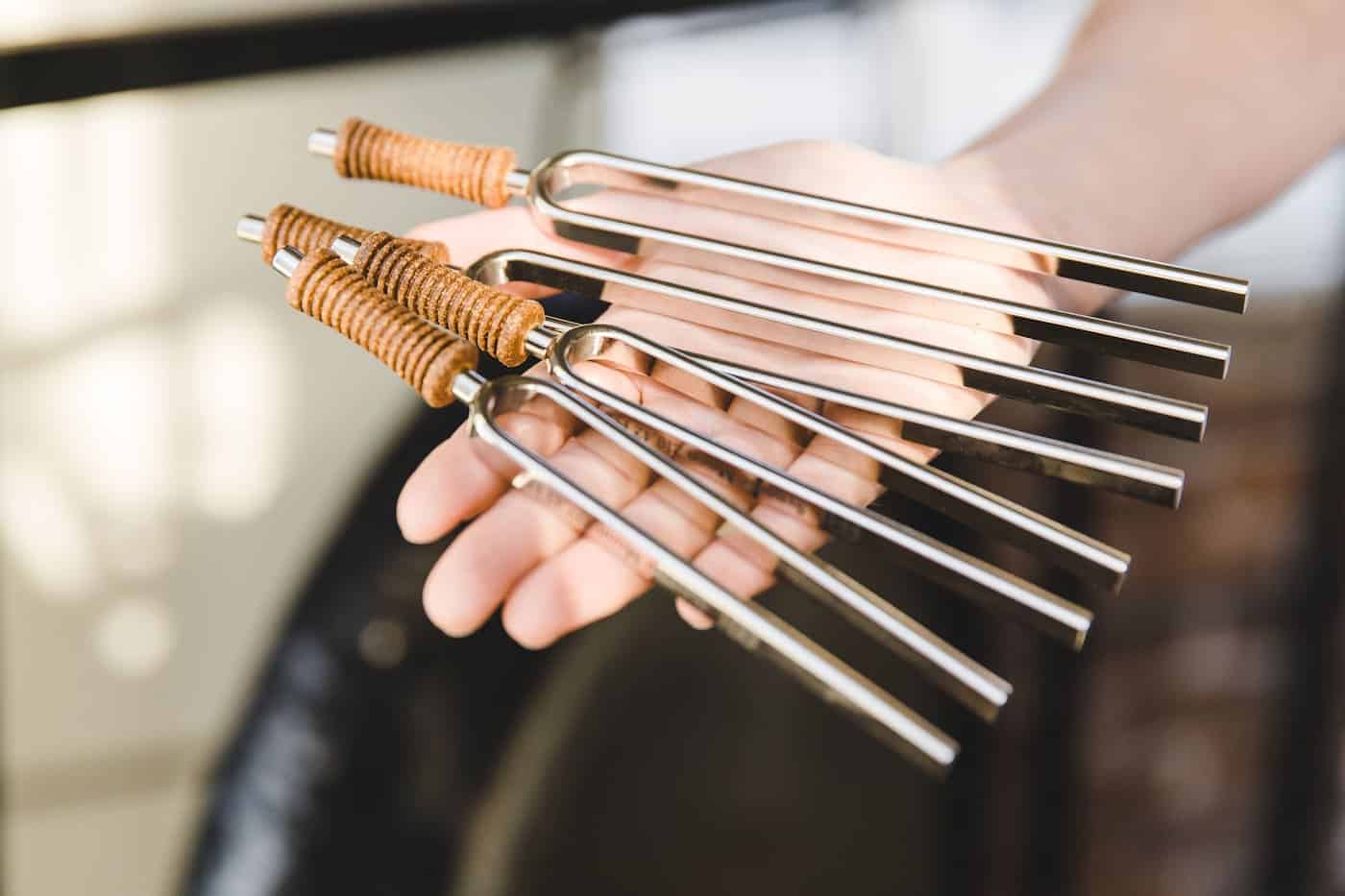
Sound is a mechanical wave that travels through a medium, usually air, and is processed through the ear. Mechanical vibration can be applied directly to the body through contact: a vibrating platform, a tuning fork pressed against skin, a device attached to tissue. You do not need to hear a vibration for it to affect you, and you do not need direct contact for something to count as sound.
This distinction matters because many “frequency healing” claims borrow credibility from vibration research and apply it to sound. One common example is the claim that “40 Hz heals bone.” That framing overstates it in two ways.
First, the research in question is studying mechanical vibration delivered through direct contact, platforms under the feet, rods against bone, cells cultured on a vibrating surface, not airborne sound reaching someone’s ears from across a room. The frequency number is the same. The physical mechanism is not.
Second, even within that correct category, the research does not show a proven healing effect. Studies on mechanical vibration, typically in the 20-50 Hz range, have looked at effects on bone cell activity and bone density, particularly in older adults, and the findings are mixed. Some studies show a modest positive effect; others show none at all. Researchers describe the evidence as inconsistent rather than as an established outcome.
Ultrasound is a related point of confusion. It is technically still sound, a mechanical wave traveling through a medium, but at a frequency above what the human ear can detect, generally starting around 20,000 Hz. Some ultrasound frequencies do have real, FDA-approved medical uses, such as low-intensity pulsed ultrasound devices used to accelerate bone fracture healing at around 1.5 million Hz, but that requires a specialized medical device placed directly on the skin over the injury, not a voice, gong, crystal singing bowl, or any other sound bath or sound healing instrument.
Sound can carry some vibrational quality when the source is loud, deep in pitch, and close to or touching the body. A tuning fork placed directly on skin, or a large gong played close to someone lying nearby, can transmit a vibration that is physically felt. That is a real effect. But it is still a different mechanism from a mechanical vibration platform, and it does not support the idea that a specific frequency targets a specific healing effect.
The Frequency Claims, Checked Against the Evidence
Solfeggio frequencies. Often presented as ancient healing tones, but what is historically solid is different from what gets marketed. The real historical solfège is a medieval music teaching system (ut-re-mi-fa-sol-la) used to help people sing pitches by relative steps, not a set of specific Hertz values or therapeutic effects.
The modern “solfeggio frequency” numbers (for example, 396/417/528/639/741/852 Hz) are commonly attributed to Joseph Puleo in the 1970s and were derived from symbolic numerology and reinterpretation rather than from documented ancient tuning records or controlled research. There is no credible evidence that tones labeled as “solfeggio” frequencies reliably heal specific organs, emotions, or medical conditions.
432 Hz vs. 440 Hz. This is a tuning preference, nothing more. 440 Hz is the modern international standard for the note A in the 4th octave. Tuning to 432 Hz shifts every other note down slightly. Some people prefer how it sounds. That preference is valid, but there is no research showing 432 Hz is more healing, calming, or harmonious than 440 Hz. It is a different pitch, not a different category of effect. Note A4 has historically been tuned to a broad range of frequencies, and still is, not only 432 or 440 Hz.
Planetary frequencies. Commonly based on the work of Hans Cousto, who took a planet’s orbital period, inverted it, and used the law of the octave (doubling the frequency brings it to a new octave) to bring the resulting number into an audible range. It is a creative, artistic method for connecting a number to a note. It is not a scientific measurement of how a planet “sounds,” and the number of times the frequency is doubled is neither consistent nor standardized across planets.
528 Hz and DNA repair. No peer-reviewed research supports this claim in humans. It circulates widely in wellness marketing without a credible study to back it up.
What About Cymatics?
Cymatics gets brought up constantly as visual “proof” that some frequencies are more healing than others. The demonstration is simple: sand sits on a metal plate, the plate is vibrated at a chosen frequency, and the sand arranges itself into a pattern. People will show a pattern at 432 Hz next to one at 440 Hz (or other frequencies) and claim that one looks more beautiful, orderly, or harmonious than the other.
What that comparison leaves out is that the pattern is not a property of the frequency alone. It is a property of the entire vibrating system: the plate’s size, shape, thickness, and material all determine which patterns are even possible at a given frequency. The same frequency on a larger or smaller plate, or a plate made of a different material, will produce a different pattern, sometimes no clear pattern at all. This is basic, well-established physics, not a controversial or new finding.
So a cymatics image does not tell you anything about whether a frequency is healing. It tells you what a specific plate does when driven at that frequency. Change the plate, get a different picture, same frequency. It offers a visual demonstration of how sound interacts with matter, but it is not evidence that any frequency carries a health property.
Quick Reference: Claims vs. Evidence
| Claim | What Is Actually True |
|---|---|
| Solfeggio frequencies heal organs or emotions | No controlled research supports this. Modern numbers trace to 1970s numerology, not ancient tuning. |
| 432 Hz is more healing than 440 Hz | No research supports this. It is a tuning preference, nothing more. |
| Planetary frequencies reflect a planet’s true sound | No. This is an artistic octave-conversion method, not a scientific measurement of the planet’s frequency or sound. |
| 528 Hz repairs DNA | No peer-reviewed research supports this claim in humans. |
| Cymatics proves a frequency is healing | No. The pattern depends on the plate’s size, shape, and material, not the frequency alone. Change the plate, change the pattern. |
What the Research Actually Supports
None of this means sound has no measurable effect on the body. It means the effect is not tied to a specific frequency.
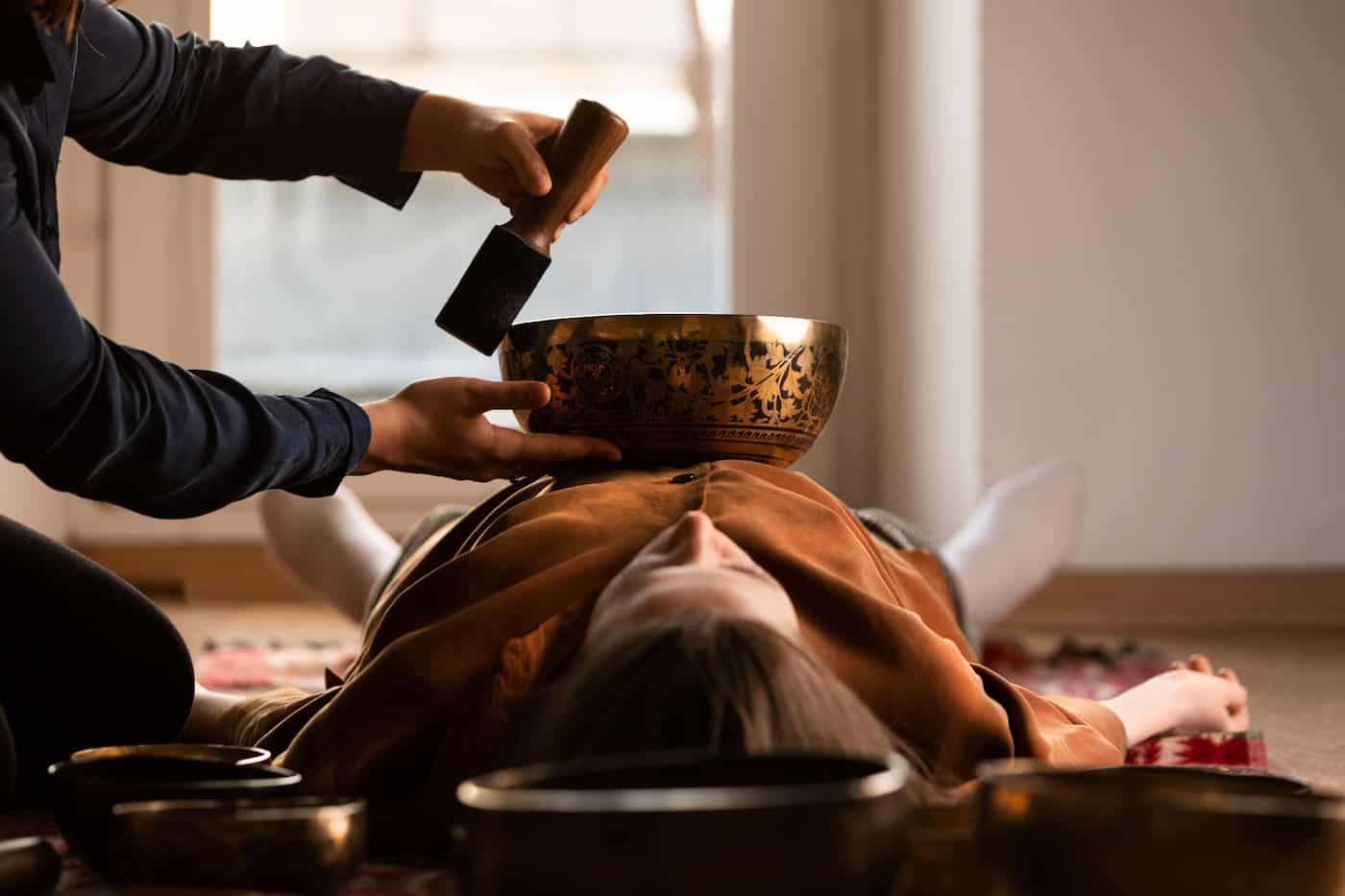
A body of research on music- and sound-based relaxation has generally indicated reductions in stress markers, such as cortisol. This is not about one magic tone. It is a broader nervous system response to calming, rhythmic, or intentionally structured sound, and the research supporting this general direction is more established than the research behind any single-frequency claim.
The research on brainwave entrainment, the idea that a steady rhythm can shift brain activity toward a certain state, is more mixed. Some studies support it, others do not, and reviewers have called for more standardized research before drawing firm conclusions. It is a real area of study, but it is not completely settled.
What I Learned Chasing Frequency Healing
I have been doing this since the early 2000s, and I believed the claims about frequency at first, too. My first crystal bowl was note D, and I bought it because D was labeled as the sacral chakra note, the one tied to manifesting. I played it for myself and others and quickly learned that one note would not produce anything. I did not feel more connected to my sacral chakra just by playing one crystal singing bowl.
I bought my first gong shortly after, and I chose to start with a Jupiter gong, again because of what it was supposed to represent, but also because it was closer to my budget, so there was an element of finances as well. Jupiter is a smaller gong, and I truly wanted the deep, booming sound of a Mercury gong, which is larger, instead. I spent close to a year wishing I had bought the one I actually wanted because I had chosen it based on a label rather than the sound itself.
None of that early frequency-chasing built my business. What built it was years of playing for hundreds of thousands of people, developing a structured way of playing that creates a deep, therapeutic-style inward experience, and learning how instruments combine musically. A successful sound-based practice takes much more than chasing specific frequencies. It requires quality instruments, practice, and the right education.
“There is no frequency that is more healing than another. It is about the instruments someone plays, how they play them, and their expertise in structuring an entire sound bath.” – Jamie Bechtold, professional sound bath player since 2004, has led more than 4,000 public group sound baths
So What Actually Makes a Sound Bath Work?
If it is not a specific frequency, what is it?
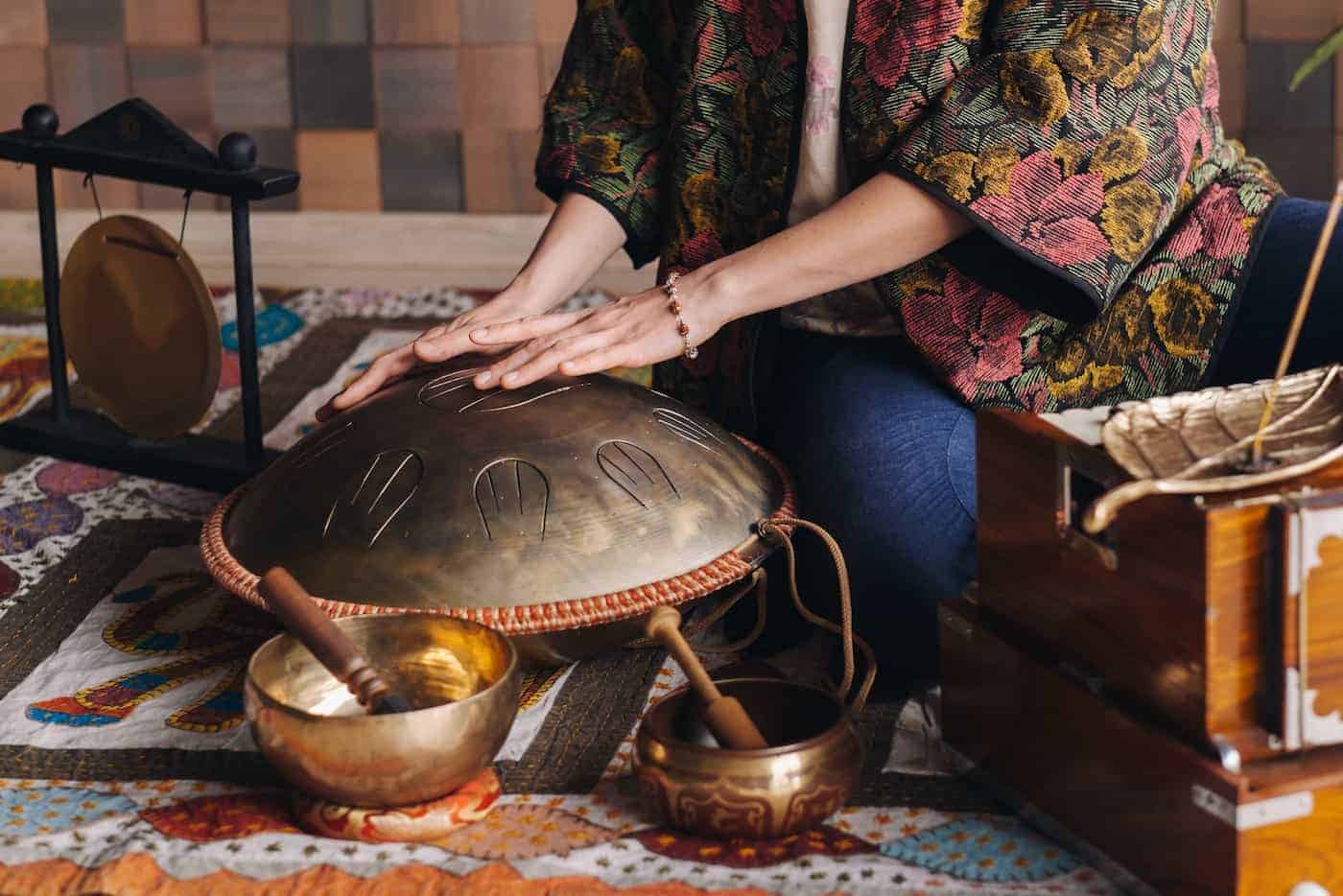
It is the same thing that makes any music work: combination, dynamics, and skill. One guitar string is not better than another. What matters is how notes are combined, how they are played, and the intervals created between them. A sound bath is not one note or a specific instrument doing the healing. It is a skilled musician making deliberate choices about which instruments, which combinations, and which pacing will create the conditions for someone to relax and go inward.
That is a real and valuable offering, even without a specific frequency tied to any particular healing. A relaxed nervous system is generally associated with better conditions for the body to recover and regulate. That is a more honest mechanism than an invented one, and it does not need embellishment layered on top.
There is no credible evidence for specific healing frequencies. There is skillful sound, used well, that creates the conditions for people to rest, release stress, and go inward. That is not a lesser claim, just a more honest one.
Ready to build your own professional sound bath business? The Group Soundbath Player Certification Course gives you the training to play with real skill, without relying on magical frequencies to sell it. Sign up here.
Frequently Asked Questions
Do Solfeggio frequencies really heal?
No. There is no controlled research supporting the idea that individual Solfeggio tones affect specific organs, emotions, or conditions.
Is 432 Hz better than 440 Hz?
No, it is a tuning preference. There is no research showing 432 Hz is more healing or harmonious than 440 Hz.
Does cymatics prove some frequencies are healing?
No. A cymatics pattern depends on the plate’s size, shape, and material, not the frequency alone. The same frequency on a different plate produces a different pattern.
Does 40 Hz heal bones?
The research behind that claim examines mechanical vibration transmitted via direct contact, not airborne sound, and even that research shows mixed results.
Does sound have any real effect on the body?
Yes. Research links music and sound-based relaxation to reductions in stress markers such as cortisol. This is a general nervous system response, not an effect tied to any specific frequency.
Related reading: Do you need training to play sound baths?| What is the difference between a sound bath, sound healing, and sound therapy?| How instruments shape a sound bath
